On the Water
Bats Leave Nickajack Cave at Sunset, and You Can Paddle Up to It
From late March to early October, tens of thousands of gray bats fly out of a flooded cave on Nickajack Lake at dusk. Watch free from the boardwalk or book a sunset kayak tour.
About twenty minutes west of downtown Chattanooga, on a quiet stretch of Nickajack Lake, there is a flooded cave mouth that most people drive past on I-24 without knowing it exists. On a warm evening between late spring and early fall, sit still in front of it as the light goes orange. Tens of thousands of bats come pouring out of the dark in a river of wings that can take the better part of an hour to pass.
It is one of the largest gray bat colonies in the Southeast, it is free to watch, and it is in Marion County, Tennessee. This guide covers how to see it, plus the part of the story involving Johnny Cash.
Quick facts
- Where: Nickajack Cave Wildlife Refuge, Maple View Public Use Area, near New Hope and South Pittsburg, TN
- Drive time: About 30 to 35 minutes from downtown Chattanooga, about 1 hour 50 minutes from Nashville
- Best season: Roughly late March through early October, with peak viewing in June, July and August
- Best time of day: Arrive 30 minutes before sunset. The emergence starts at dusk.
- Cost: Free from the viewing boardwalk. Guided kayak tours are paid and book out fast in summer.
- Going inside: Not allowed. The cave is gated to protect the colony.
Why there are so many bats
The residents are gray bats (Myotis grisescens), a federally endangered species. Unlike most bats, gray bats live in caves year-round and do not roost in trees or attics, which makes them dependent on a small number of suitable caves. Nickajack is one of the good ones.
Estimates for the summer colony run into the tens of thousands, with the upper end of published figures reaching around 100,000 animals. They spend the day inside, and at dusk they leave en masse to hunt insects over the lake and the surrounding river gorge. A single gray bat can eat thousands of insects a night. Multiply that across the colony and you understand why the mosquito situation on Nickajack Lake is better than it has any right to be.
The cave has a long human history. It was mined during the Civil War for saltpeter, a key ingredient in gunpowder, and it was a well-known local landmark long before that. In 1967 the Tennessee Valley Authority impounded Nickajack Reservoir, which flooded the lower cave passages permanently. The colony survived, and the entrance was later gated and designated a wildlife refuge to keep people out and bats in.
Option 1: Watch for free from the boardwalk
You do not need a boat. A short, easy walkway and viewing area at the Maple View Public Use Area looks out toward the cave entrance across the water. It is flat, it is quick, and it costs nothing.
Park, walk a few minutes, and find a spot along the rail. As the sun drops, the first few bats trickle out. The trickle becomes a stream, and the stream becomes a steady dark ribbon flowing out over the lake. On a good night in midsummer it does not stop for forty-five minutes.
Free-viewing tips
- Get there early. Thirty minutes before sunset gives you a parking spot and a good place at the rail. Summer weekends draw a crowd.
- Bring bug spray. The bats are working on it, but they have not finished.
- Bring a red-filtered flashlight if you have one. White light disturbs the colony and ruins everyone’s night vision.
- Skip the flash. Phone flash will not reach the cave anyway, and it bothers the animals.
- Be quiet. You can hear them, a papery, rushing sound, but only if the crowd cooperates.
Option 2: See it from a kayak
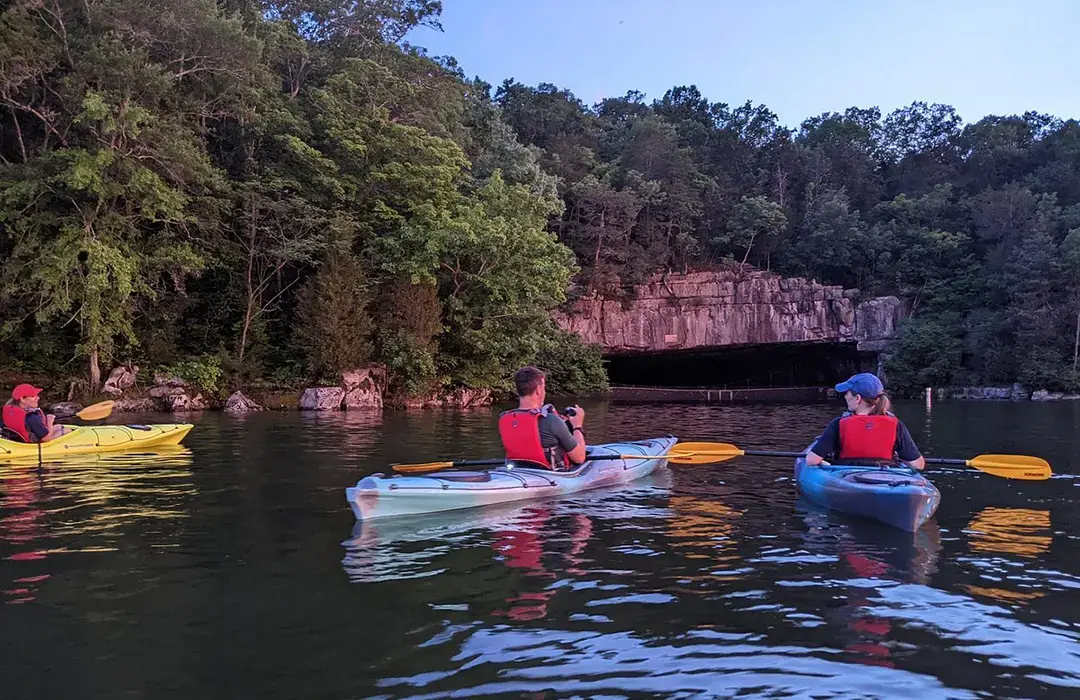
The guided sunset paddles to the cave are run by Chattanooga Guided Adventures, based in Chattanooga. Tours are timed to the emergence. They launch from a public ramp in the South Pittsburg area and cover an easy few miles of flat water before parking the group in front of the cave for the show. Guides handle the timing, the route and the safety, which matters because you finish in the dark.
The tours run seasonally and sell out through the summer, so book well ahead and do not drive up hoping for a spot. Check current dates and pricing on their website. Schedules shift with the season and the water level.
What the paddle is like
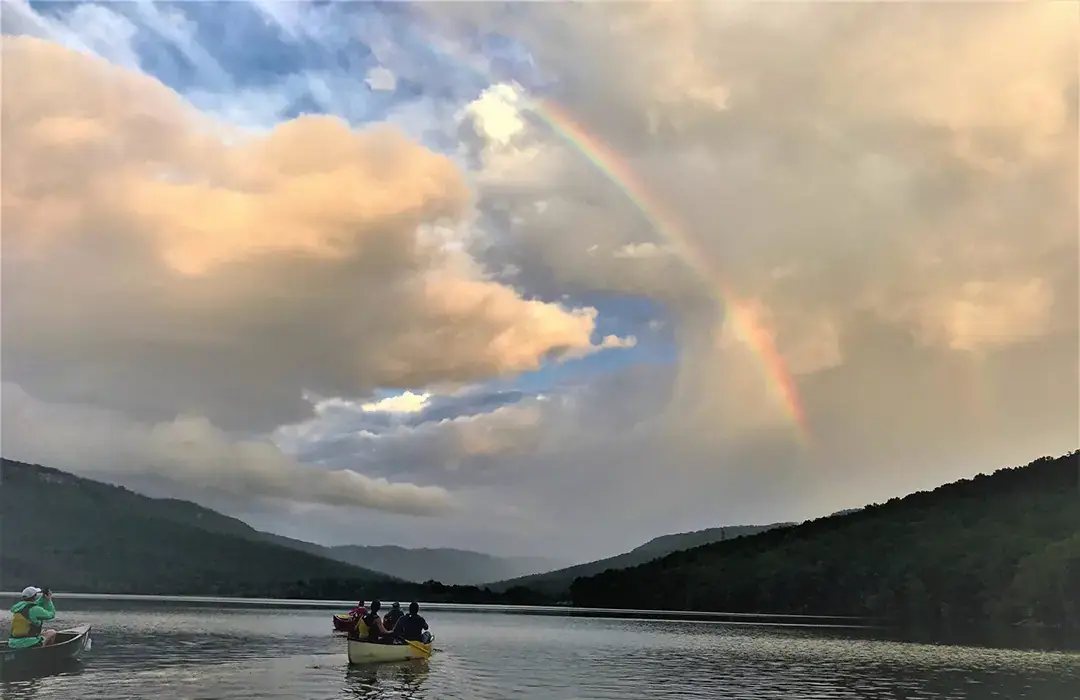
- Difficulty: Beginner-friendly. Nickajack is a reservoir, so it is flat water, not whitewater.
- Distance: Typically around three miles round trip at a relaxed pace.
- Wildlife: Osprey are common overhead, great blue herons work the shoreline, river otters turn up, and bald eagles are a real possibility on this stretch of the Tennessee River.
- Dress for wet: Quick-dry clothes, secured shoes, and a dry bag for your phone.
The Johnny Cash story
As Johnny Cash told it in his 1997 autobiography, he came here in 1967 at the bottom of a years-long amphetamine addiction, intending not to come out. He crawled into the cave with a flashlight and kept going until the batteries died, then lay down in total darkness to wait. Instead of dying, he described a moment of clarity, the sense that his life was not his to end, and began crawling, with no light and no sense of direction, toward what turned out to be the entrance. He wrote that his mother and June Carter were waiting outside with a basket of food, saying they had known something was wrong.
He got sober not long after. It is one of the most retold conversion stories in country music.
Historians note the account did not appear in his earlier 1975 memoir and surfaced only thirty years after the fact, so treat it as the story Cash chose to tell about himself and not as documented history.
Make it a whole evening
The emergence can last up to an hour, which leaves you with a summer evening in Marion County and no plan. Some easy pairings:
- Eat first in South Pittsburg or Jasper. You will finish at the cave after dark and most small-town kitchens close early, so get dinner in before the show. The restaurant list covers South Pittsburg and Jasper.
- Add a morning on the water. Nickajack Lake has boat ramps, fishing, and a shoreline that stays quiet on weekdays.
- Pair it with a waterfall. Foster Falls is a 60-foot drop with a swimming hole at the bottom, less than an hour away.
- Go full spooky. Hales Bar Dam, where the old powerhouse hosts ghost tours, is on the same lake at Hales Bar Marina.
The bats do not come out until sunset, so this is an evening trip, and staying over beats a drive home in the dark. Lakeside cabins, campgrounds and hotels are all within 20 minutes of the cave.
Make it a weekend
Stay nearby
Where to stay
- Cabins and vacation rentalsLakeside cabins within 20 minutes of the cave
- Camping & RVs
- Hotels
Where to eat
- Restaurants in South PittsburgEat before the show. Kitchens close early.
- Restaurants in Jasper
Plan the trip
- Outdoor Adventure weekendA two-day plan built around the trails and the lake
Common questions
Does it cost anything to see the bats at Nickajack Cave?
No. Viewing from the boardwalk at the Maple View Public Use Area is free and open to the public. Only guided kayak tours cost money.
What months can you see the bats?
Roughly late March through early October, with the biggest and most reliable emergences in June, July and August. In winter the colony is not active at the surface.
What time do the bats come out?
At dusk. Plan to be in position about 30 minutes before sunset, and expect the emergence to last anywhere from 20 minutes to an hour.
Can you go inside Nickajack Cave?
No. The entrance is gated to protect an endangered gray bat colony, and entering is illegal. The lower passages were also permanently flooded when Nickajack Reservoir was impounded in 1967.
How far is Nickajack Cave from Chattanooga and Nashville?
About 30 to 35 minutes west of downtown Chattanooga via I-24, in Marion County, Tennessee. It is roughly a 1 hour 50 minute drive from Nashville.
Is the bat emergence good for kids?
Yes. The free viewing area is flat and short, and the bats stay well overhead. For the kayak tours, check the outfitter's minimum age, since the paddle finishes after dark.